eleleyiz-neet-kadinlari

“Eleleyiz” Aims to Integrate Women Affected by the Earthquake Into the Workforce

It focuses on supporting young women who are neither in education nor employment (NEET) to join the workforce. 

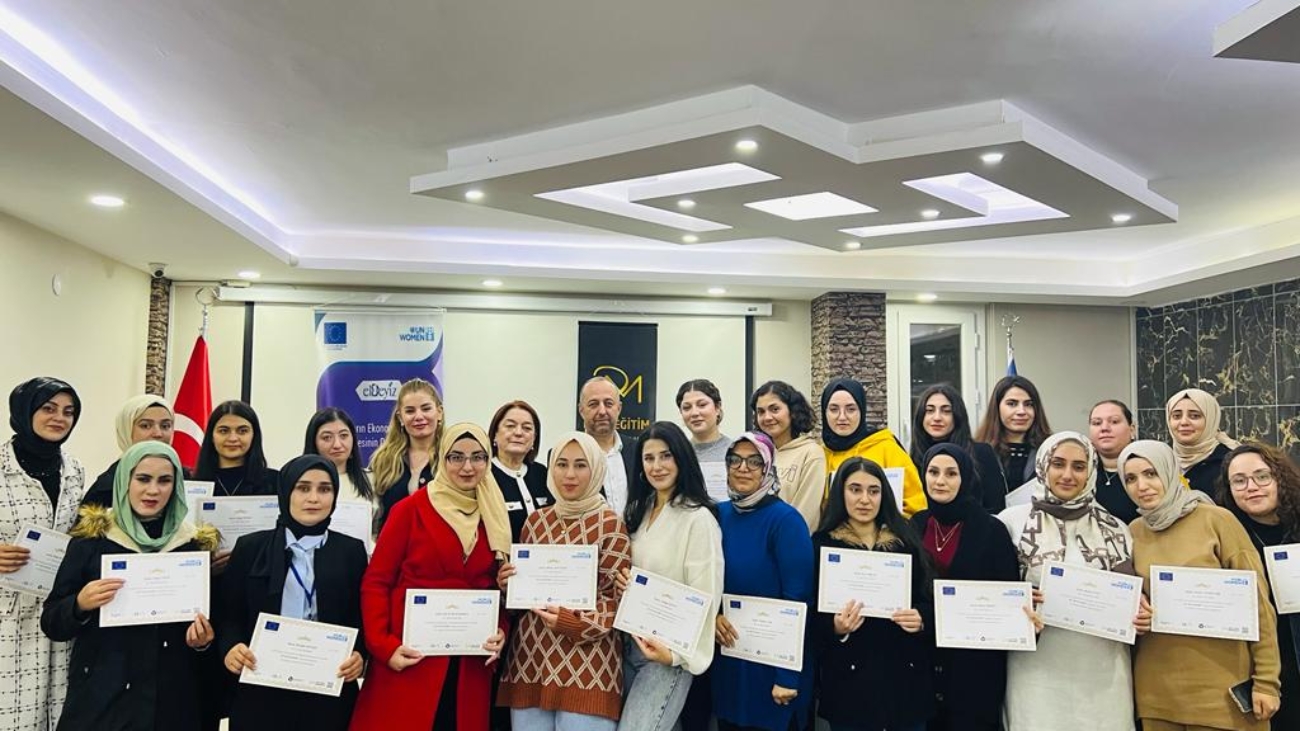
INGEV has provided professional training to 110 earthquake-affected women in Gaziantep, Şanlıurfa, and Mardin, and offered career counseling to 100 women.


INGEV’s Eleleyiz project targets the economic empowerment of NEET women. Launched in Gaziantep, Şanlıurfa, and Mardin, the project seeks to increase employment among women affected by the earthquake. To date, career mentorship has been provided to 11,000 women, and 100 women have received vocational training in digital marketing, social media management, and basic accounting. The Eleleyiz project is conducted under the EU-funded “Strong Civil Space for Gender Equality” initiative implemented by UN Women.

The project focuses on NEET women aged 18-29, aiming to enhance their vocational skills through professional training. The comprehensive need analysis, training, mentorship, and consultancy form the core of the project, which is evolving into a significant model for empowering young women economically in Şanlıurfa, Gaziantep, and Mardin.

The need analysis highlights the urgent and critical nature of the vocational and post-earthquake needs of NEET women. According to this analysis:

  • 71% of previously employed NEET women cite low wages, 59% mention uninsured work, and 26% refer to caregiving responsibilities as reasons for not continuing in the workforce.
  • 79% of job-seeking NEET young women are unaware of where to seek support for joining the workforce.
  • 59% of these women rely on acquaintances for job hunting.
  • Only 13% are aware of online job search methods.
  • 11% know how to write a CV, and 10% understand how to conduct a successful job interview.
  • Just 6% have knowledge about accessing vocational training or internship opportunities.
  • 53% need guidance on finding employment, and 45% require support in vocational training.

The project involves collaboration with local governments, NGOs, business organizations, public representatives, universities, and other stakeholders. The “Eleleyiz” Model, linking education with employment, also provides these young women with individual, goal-oriented counseling.

Hande Soğancılar, the INGEV Eleleyiz project coordinator, states that the project aims to help women gain economic independence by joining the workforce. INGEV invites all local stakeholders in the region to collaborate, supporting the employment of these young women, both professionally and socially competent. The empowerment of economically inactive women will continue in other cities.

Under the “Eleleyiz” project, 110 women in Mardin, Şanlıurfa, and Gaziantep have received vocational training. These trainings, determined through comprehensive workshops in the region, aim to enhance employability in digital marketing, social media management, and basic accounting. Participating young NEET women gained sector-specific skills and received e-government approved certificates upon completion. Additionally, 100 women have received career mentorship, including professional support in job search strategies and CV preparation. These sessions, where participants created a 5-year career roadmap, included mentorship from prominent figures in the job market.


To read the anaylsis:
https://ingev.org/reports/Eleleyiz-INGEV-Need-Analysis-of-NEET-Women-2023.pdf
Girişimci-Ruh-Şanlıurfa'da-Yükseliyor

Entrepreneurial Spirit Soars in Şanlıurfa

INGEV has been continuing to support the entrepreneurial and business aspirations of refugees through the ‘Incubation and Small Grants’ Program, in collaboration with DRC, over the past 2 years as part of the Bridges III project. We empower our beneficiaries with basic and advanced entrepreneurship training, financial and legal consulting services, and networking events.

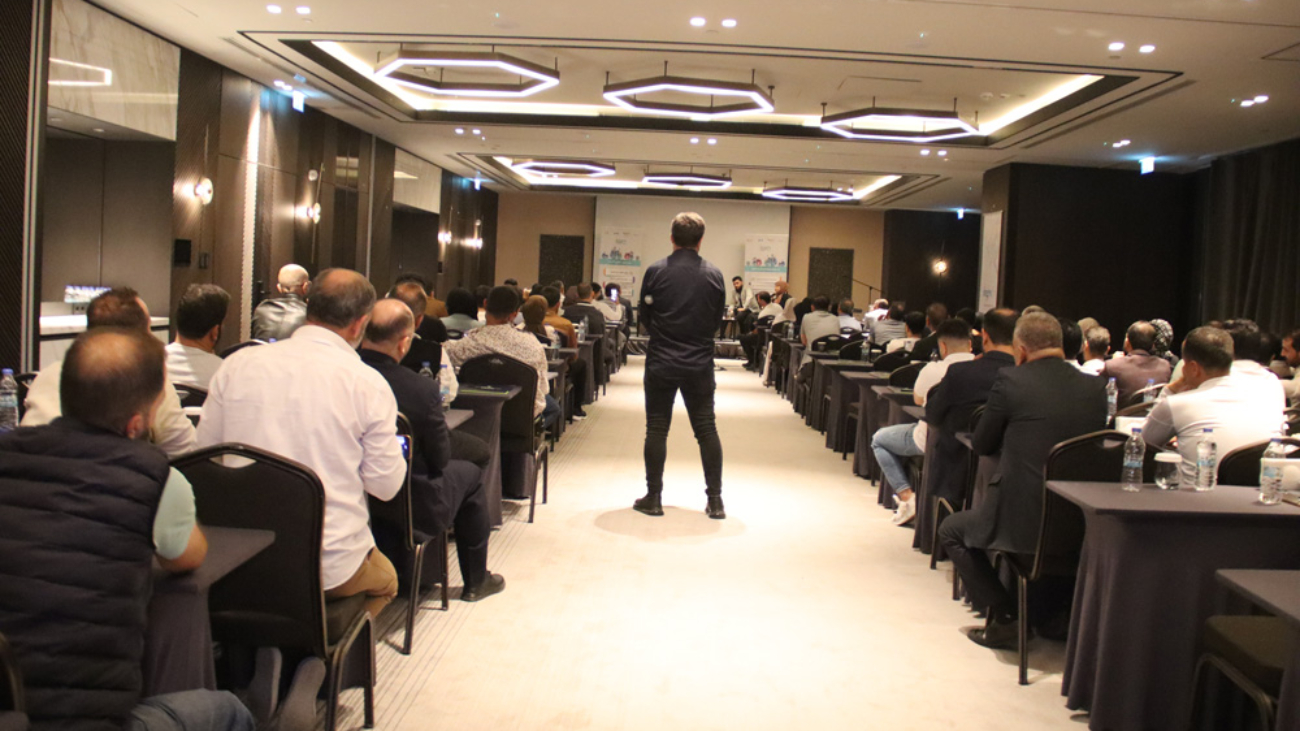
As the third phase of the Bridges project comes to a close, we had the opportunity to gather in Şanlıurfa for a special event titled ‘Bridging Entrepreneurship: Unleashing Entrepreneurial Potential.’

During this unique event, İbrahim Karatüme, Head of Disaster and Migration Services at Şanlıurfa Metropolitan Municipality, provided insights into the trade situation in Şanlıurfa to the entrepreneurs. Odip Enis, Director of the DRC Economic Improvement Program, shared information about the Bridges Project, and E. Merve Yağmuroğlu, Coordinator of INGEV’s Refugee Livelihood Resources Program, celebrated the successes of all our beneficiaries. The event also offered our beneficiaries the opportunity to connect with each other and share their inspiring experiences.

This project is financed by the KfW Development Bank of Germany and supported by DRC.

mardin-eleleyiz-thum

“Hand in Hand” Mardin Workshop Identifies Concrete Steps for NEET Women’s Employment

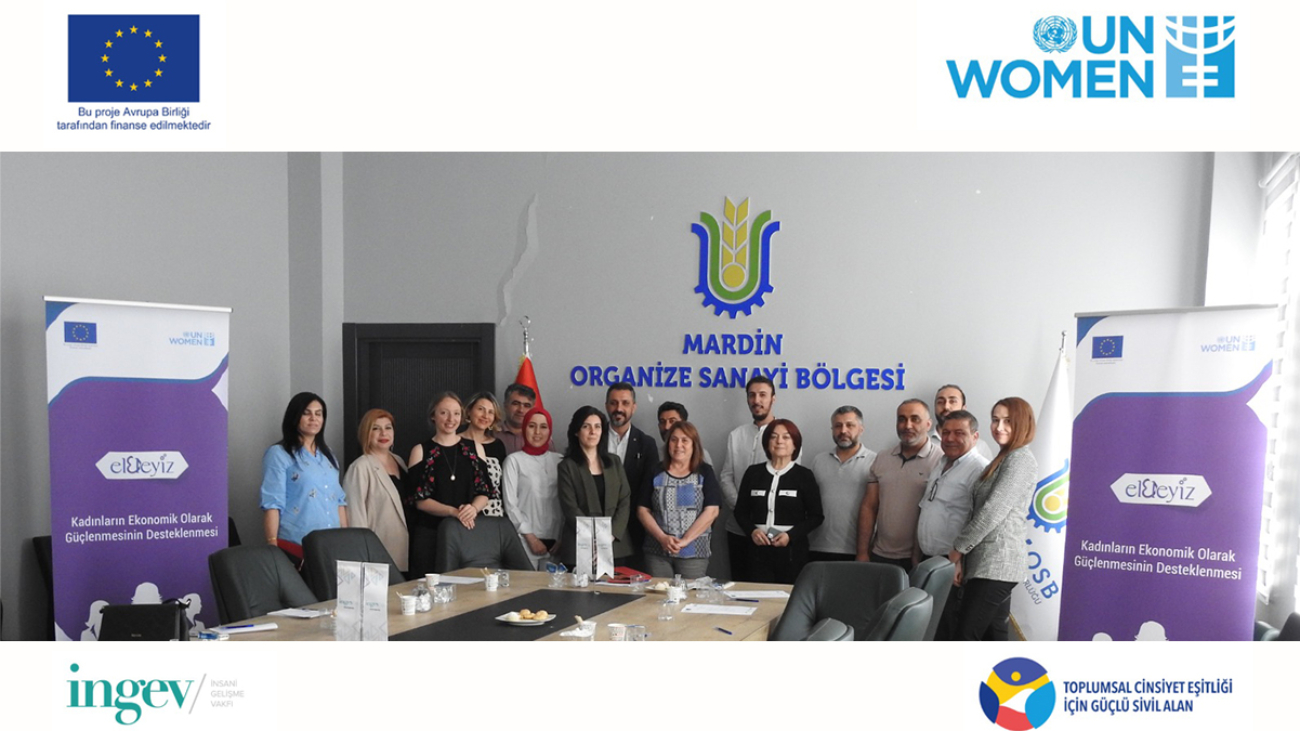
As part of the “Strong Civic Space for Gender Equality” project implemented by UNWomen with the financial support of the Delegation of the European Union to Turkey, we organized a workshop in Mardin on May 18th.

At the “Hand in Hand” Supporting Women’s Economic Empowerment – Mardin Workshop, civil society organizations, local government representatives and participants from the business world in the region discussed the training and other needs for the employment of NEET (neither in education nor in employment) women in the textile sector and concrete steps were identified.

Delivering an opening speech on behalf of the General Directorate of Mardin Organized Industrial Zone, which provided venue support for the workshop, Abdulnasır Duyan, Chairman of the Board of Directors of Mardin OIZ, stated that as Mardin OIZ management, they support such projects for women’s employment and that women’s participation in business life is also very important for them. He emphasized that although the textile sector is the most suitable sector for women in the region, the production and entrepreneurship potential of Mardin women is also high.

We made a fast start to the project and got to work!

This news article has been produced within the scope of the project “Strong Civic Space for Gender Equality” implemented by UN Women with the financial support of the European Union. The views expressed in this article are those of INGEV and do not necessarily reflect the official views of UN Women, the United Nations, its affiliates or the European Union.

depremin 100 günü

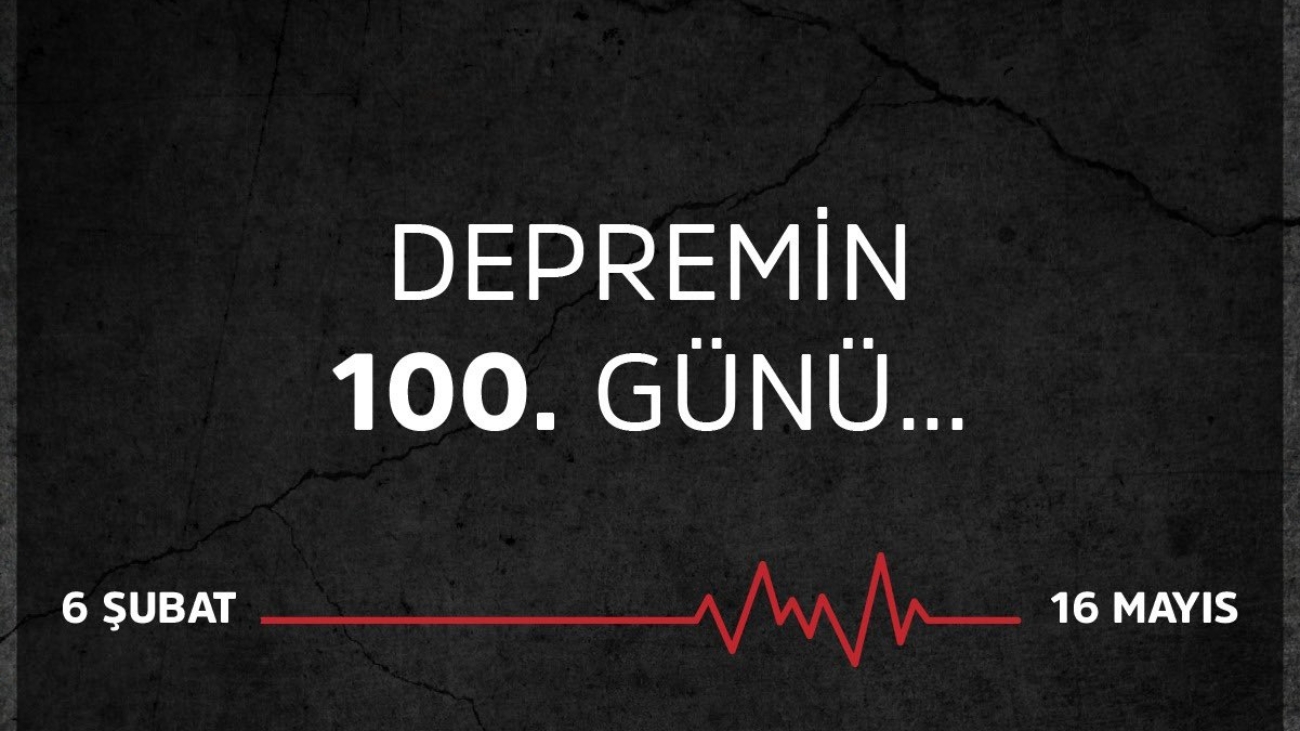
100th Day of the Earthquake

Since the first day of the earthquake on February 6, we have been working as Disaster Platform members for 100 days for our citizens affected by the disaster.

As Disaster Platform, a total of 2,573,905 humanitarian aid support has been provided through the logistics center we established in Hatay Expo.

In addition to basic humanitarian aid, we have been working in the fields of psychosocial support, education, health, women and children.

As members of the Disaster Platform, we would like to thank our stakeholders, donors and volunteers for their contributions.

ekoturktv-deprem-cancakir

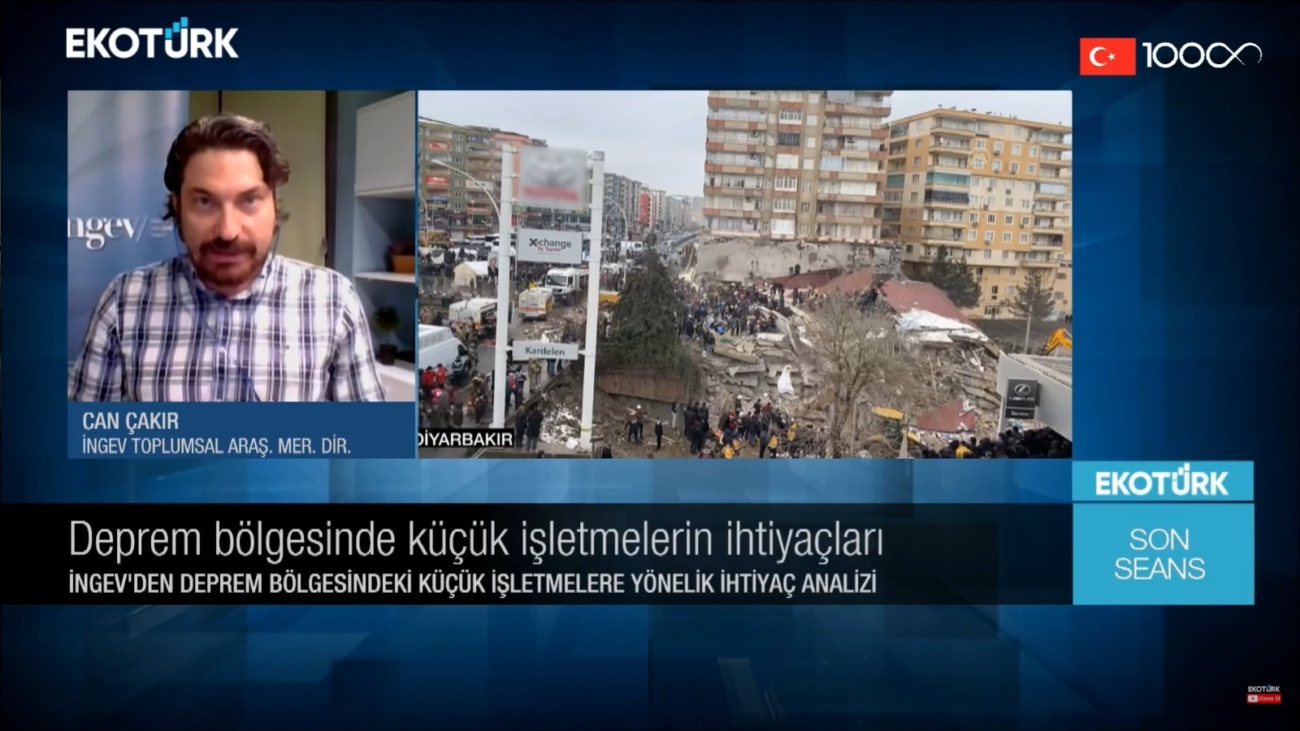
EkoTürk TV Live Broadcast – “Needs of Small Businesses in the Earthquake Region”

After the earthquake disaster that shook our country deeply, it is critical to determine the needs of SMEs in the disaster area and to evaluate them quickly.

Can Çakır, Director of INGEV TAM (Center for Social Research), was a live guest on EkoTürk TV’s Son Seans program presented by Ali Çağatay.

Click here to watch the live broadcast where Can Çakır talks about the results of the “Disaster Region Businesses Rapid Assessment” research results of INGEV’s interviews with SMEs in the region:

https://bit.ly/43aKu9t

Highlights from the research: 

  • 49% of businesses cannot continue to make sales after the earthquake.
  • 25.5% of business owners have “plans to migrate to another city outside the earthquake zone”.
  • 44% of SMEs have ceased operations and 45% have severely damaged business vehicles.
  • The city with the highest percentage of business owners who plan to leave their city permanently is Hatay with 40%.
  • According to the estimates based on the survey, Istanbul, Ankara, Bursa and Mersin will be the most preferred cities for business owners migrating out of the earthquake zone.
image

The State of SMEs in the Earthquake Region – Interim Results

The interim results of our study on the situation of SMEs in the earthquake region were shared at a meeting. A brief summary and takeaways:

The interim results of the “rapid assessment” study conducted by the İNGEV Social Research Group (İNGEV TAM) on entrepreneurs in the earthquake zone, covering 427 business owners, of which 249 were completed, were shared with the relevant organizations. More than 50 organizations attended this meeting.

This first phase covered regions other than Adıyaman and Kahramanmaraş. The study was carried out with INGEV’s own resources and volunteer support.

The aim is to contribute to the planning of future “improvement” efforts.

44 percent of SMEs have ceased operations, 45 percent have serious damage to their business vehicles. Only 11 percent have earthquake insurance.

External financing and referrals are essential for recovery efforts.

Twenty percent of business owners in the region have left their province. Of those who have left, Istanbul is the first province (27 percent). Mersin and Gaziantep are next, despite being in the earthquake zone. Adana and Gaziantep are becoming “hubs” used by many organizations for relief efforts. Meanwhile, 18 percent of SMEs do not plan to return to their jobs.

The study identifies the urgent needs of each SME individually in order to create data for “Business Recovery Mapping” as an open source. Collectively, the service sector prioritizes the creation of a minimum working environment (even common areas), while the manufacturing industry prioritizes the repair of production tools. For everyone, cash assistance to provide these is decisive.

Stock replenishment, raw material supply and re-access to supplier markets come second. Meanwhile, the supply of skilled/unskilled labor is also a serious issue in some regions.

The scope of work continues to increase. Rebuilding livelihoods in the region will require intensive, deep efforts and strong financial support. All relevant organizations, local and international NGOs will need to focus on rebuilding lives in a sustainable way after the immediate response to food and shelter. Following the distribution of hygiene products for women and other emergency relief assistance, which we started yesterday in Gaziantep and will continue in Islahiye and Nurdağı next week, we will try to put in place support for livelihoods development, which is our main area of expertise.

depre

INGEV Post-Disaster Efforts – Information Note

President Vural Çakır published an information note about our foundation’s post-disaster efforts:

Vural Çakır: “After the disaster, we reorganized our main area of expertise by including emergency aid and early recovery in cooperation with our partner organizations.

While our social research team shares post-disaster figures and preliminary results of the SME rapid assessment with relevant organizations, our field and program management groups focus on emergency relief efforts.

After the earthquake, we identified population movements and needs on a regional basis, including the immigrant population, and shared them with the relevant institutions.

Our social research team recently shared the evaluation of 300 enterprises, the first stage of the needs analysis, which determines the damage status of MSMEs.

Thus, we would like to design a map and organize open-source support efforts for small businesses. Our Şanlıurfa team evaluates the situation of the beneficiaries we previously supported regarding business and employment.

We continue our emergency aid efforts in three areas. In the first days after the earthquake, we distributed blankets and sponge mattresses in Şanlıurfa and circulated blankets, hygiene materials, and tents in Hatay. Together with the Defne district, the number of tents we have delivered in Hatay reached 150. Our Hatay representative and colleagues from Istanbul and Şanlıurfa participate in these tent deliveries. We supply tents from companies in Ankara.

In the coming days, we will be able to work on hygiene materials, especially for women in Gaziantep. Although there is no main concentration in terms of emergency aid at this stage, earthquake survivors settled in different provinces constitute another important need group. Small local campaigns can support this segment.

This is how we try to support Validebağ Teachers’ House, which hosts earthquake-affected teachers. We also believe that with the completion of rescue and shelter works, early recovery and livelihood efforts will gain weight.

For this, we aim to establish community solidarity centers, especially in tent and container cities, in cooperation with various organizations. We continue to work on how we can increase our capacity and how we can contribute more.”

disaster-figures

Post-Disaster Figures from INGEV TAM…

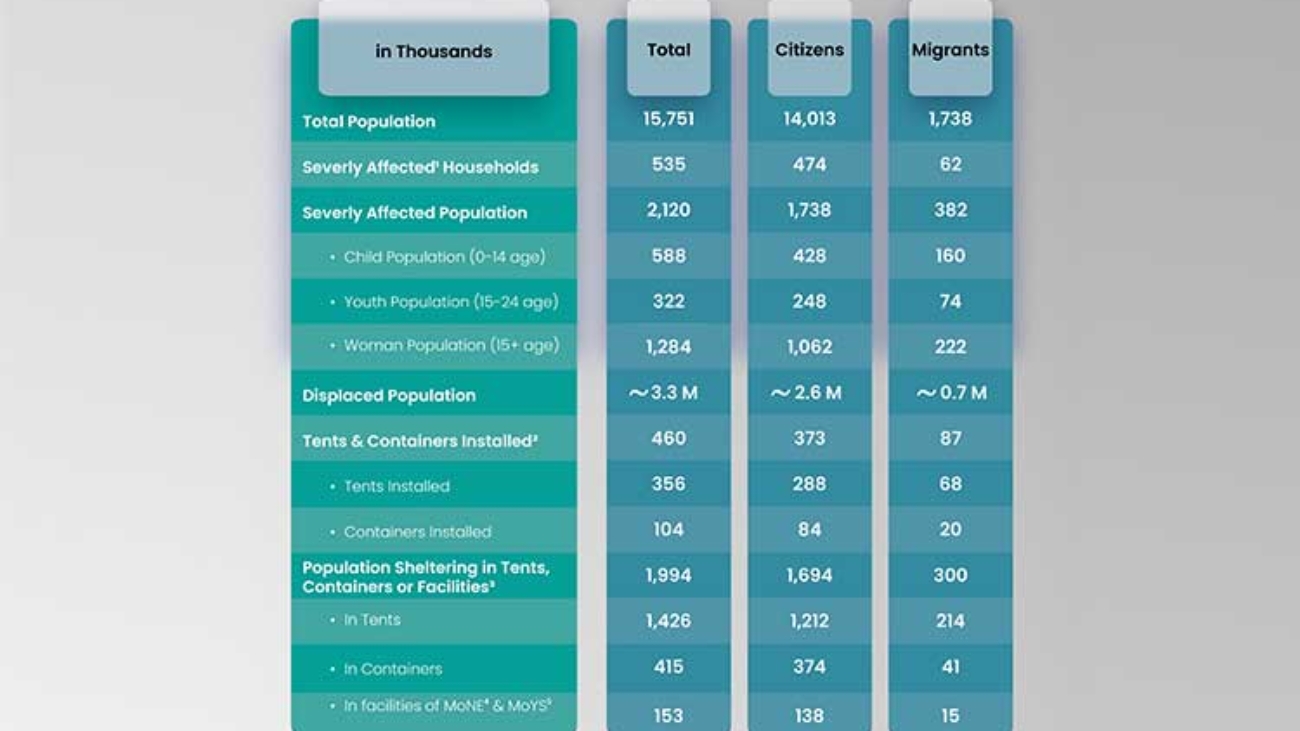
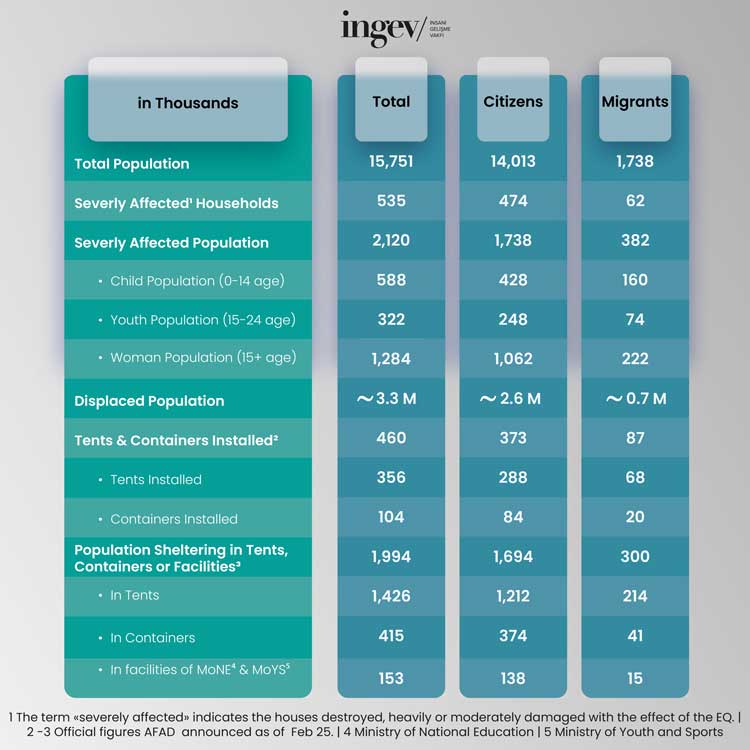
Our social research team (INGEV TAM) has compiled the post-disaster figures to provide an overview for the latest situation and support the emergency response strategies.

Following the February 6 Kahramanmaraş earthquakes, the houses of 14% of the population have been severely damaged or demolished. Children aged 0-14 make 28%, and young people aged 15-24 comprise 15% of the population seriously affected by the earthquakes. 94% of the affected population have been relocated to shelter in tents, containers or public facilities.

Prosperity, Peace, Solidarity, Impact

yeniiyil

Words for 2023!

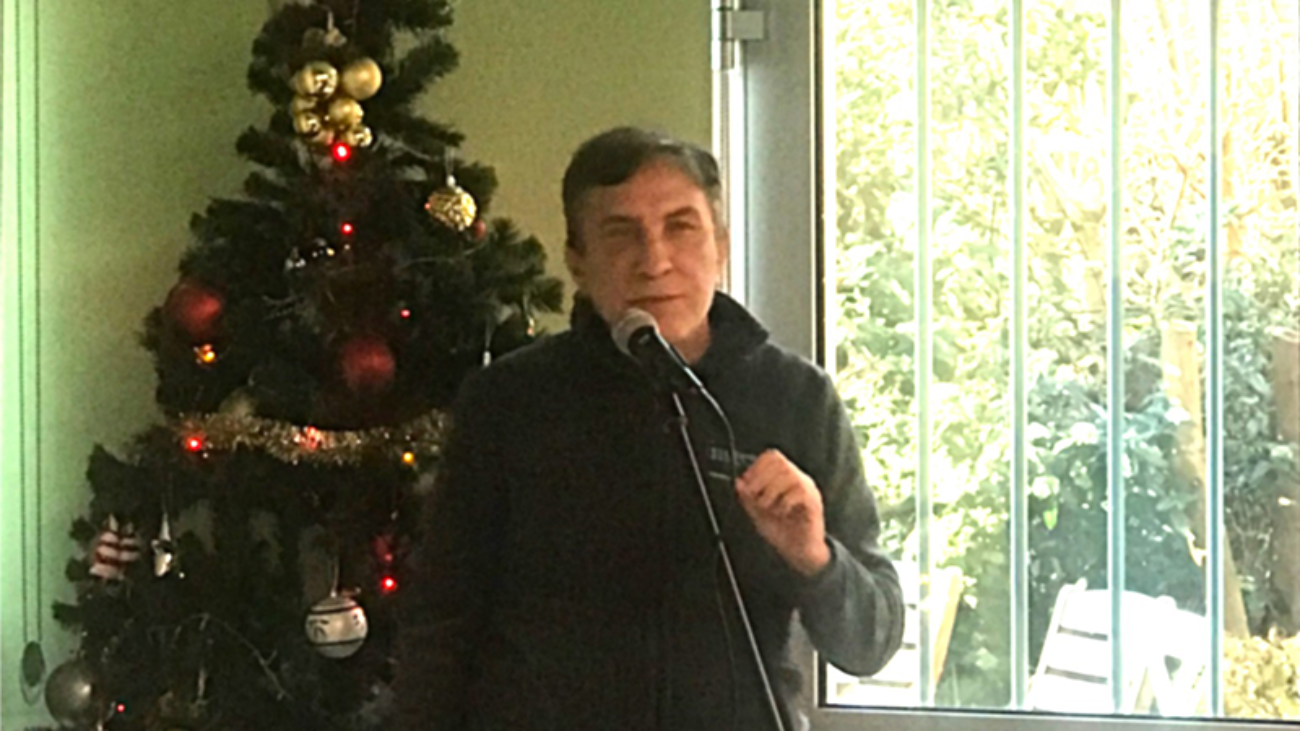
The New Year celebration at INGEV was combined with the evaluation of 2022 and wishes for 2023. Employees expressed their new year wishes with a word of their choice.

Those who came to the microphone explained the word they chose, along with their reasons. Prosperity, peace, solidarity, and impact were the most striking words.

Prosperity was a wish for renewal against the economic difficulties that the country experienced in 2022 and which had an impact on each individual.

Peace is an expression of the desire for more harmonious social relations instead of the increased stresses in our daily lives.

The impact is a reflection on our ability to continue our work independently, without being limited by the duration or framework of any single project, and to increase our contribution to the quality of people’s lives, which we have been emphasizing a lot in recent months.

For all this, we need more solidarity.

Once again, we wish everyone a year of prosperity, peace, and solidarity in 2023, in which they can make an impact on social development.