taking-on

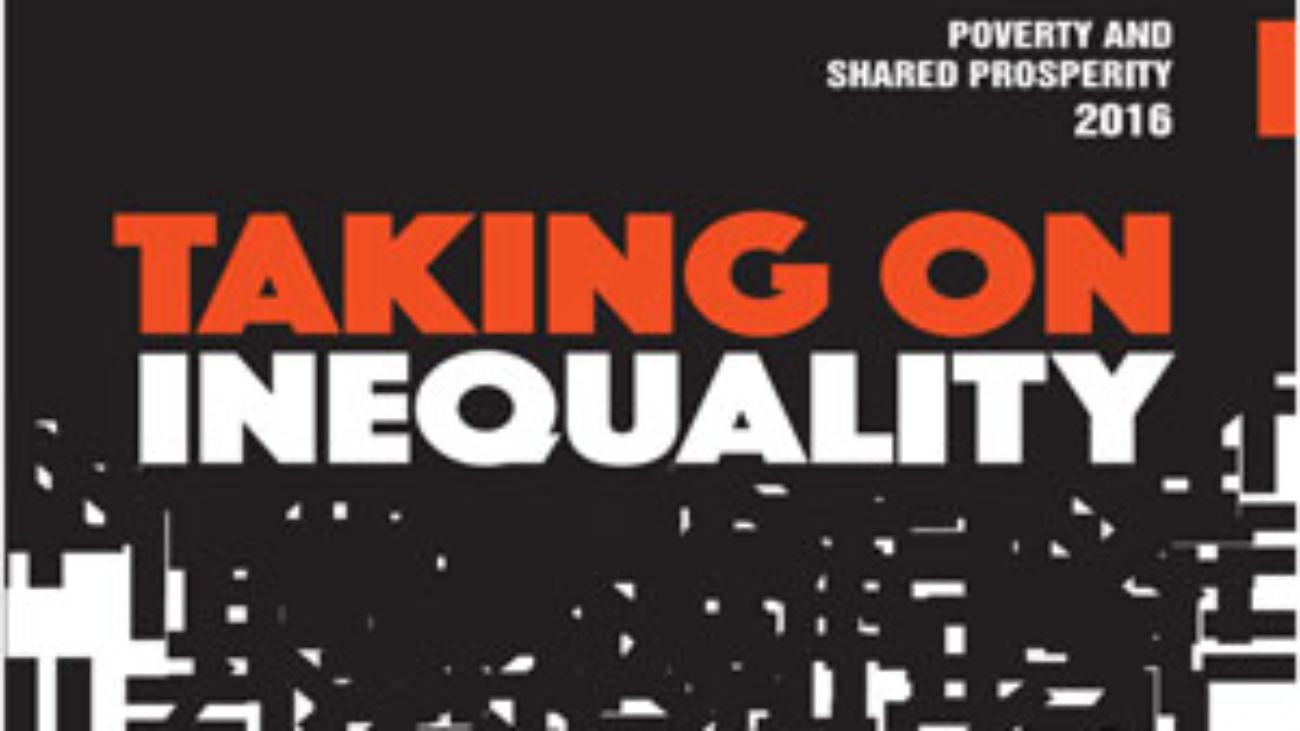
World Bank Report on “Poverty and Shared Prosperity”

A new World Bank study on poverty and shared prosperity says that extreme poverty worldwide continues to fall despite the lethargic state of the global economy. But it warns that given projected growth trends, reducing high inequality may be a necessary component to reaching the world’s goal of ending extreme poverty by 2030.

According to the inaugural edition of Poverty and Shared Prosperity—a new series that will report on the latest and most accurate estimates and trends in global poverty and shared prosperity annually—nearly 800 million people lived on less than US $ 1.90 a day in 2013. That is around 100 million fewer extremely poor people than in 2012. Progress on extreme poverty was driven mainly by East Asia and Pacific, especially China and Indonesia, and by India. Half of the world’s extreme poor now live in Sub-Saharan Africa, and another third live in South Asia.

In 60 out of the 83 countries covered by the new report to track shared prosperity, average incomes went up for people living in the bottom 40 percent of their countries between 2008 and 2013, despite the financial crisis. Importantly, these countries represent 67 percent of the world’s population. (estimated 4.5 billion people)


To read the full report…

yuvalnoahharari

Harari will be at Act*Human Summit…

One of 21st Century’s Most Acclaimed Book – The author of “Sapiens: A Brief History of Man Kind”, Yuval Noah Harari will be at Human Development Summit…

Prof. Yuval Noah Harari is the author of the international bestseller “Sapiens: A Brief History of Humankind”..

He was born in Haifa, Israel, in 1976. He received his Ph.D. from the University of Oxford in 2002, and is now a lecturer at the Department of History, the Hebrew University of Jerusalem.

He specialized in World History, medieval history and military history. His current research focuses on macro-historical questions:

To know more about Harari…

emma

The Importance of the Corporation in Shaping Human Development

Deputy editor of “The Economist” and editor for “1843” magazine, Emma Duncan, will be at Human Development Summit…

Emma Duncan is the Editor of 1843 , the relaunch of The Economist’s high-end magazine, Intelligent Life. Renamed for the year The Economist was founded, she leads a team of 25 across editorial and commercial writers. The magazine covers the world of ideas, culture and lifestyle and its coverage goes beyond Europe to include America and Asia.


To know more about Duncan…

konferans ingev

Our new office location is Kosuyolu…

Dear İNGEV ( Human Development Foundation) Friends ,

Our foundation has moved into the heart of Kosuyolu .

Weekdays between 09:00-6:00 pm, we will be more than happy to welcome you all to our new office, address details located below.

So where does the name Kosuyolu come from, what makes this name so special?

Acibadem’s neighboring district Koşuyolu was a district where horse races were organized by members of the Ottoman court between the years 1900-1920…


Address: Koşuyolu Cd.No : 52 Koşuyolu – Kadıkoy / Istanbul, Turkey

Tel: 0216-540 50 21

Fax: 0216-540 50 24


Our Phone or fax numbers have not changed .

Looking forward to seeing you at Kosuyolu …

Thirty-Million

UNDP documentary “Thirty Million” Gives Voice to Millions Under Threat

A UNDP-supported documentary was recently released on the threat sea-level rise poses to 30 million Bangladeshis.

South Asia country of Bangladesh is predicted to lose 17 percent of its land by the end of the century if global sea levels rise by one meter.

That has the potential to displace 30 million Bangladeshis.

The documentary, “Thirty Million”, was co-directed by British climate scientist Dr. Daniel Price – who last year cycled from New Zealand to Paris as part of the Pole to Paris campaign – and New Zealand TV journalist Adrien Taylor. The film, financed by UNDP with support from the Least Developed Country Fund of the Global Environment Facility (GEF), was launched by high ranking officials from UNDP, GEF and Bangladesh at an event in the UN Secretariat in New York City.

Last but not least, in order to raise awareness to this issue, UNDP and partners will be carrying the call for increased action through to COP22 in Marrakesh, and work with partners to translate the Paris Agreement into tangible, concrete results.

Source: www.undp.org

khgjhklş

Final Countdown for World Humanitarian Summit

whs

Less than a week to The First World Humanitarian Summit… WHS will be held 23-24 May 2016 in Istanbul, bringing together governments, humanitarian organizations, people affected by humanitarian crises, and new partners to propose solutions to our most pressing challenges and set an agenda to keep humanitarian action fit for the future.

Ingev visits Seferhisar ve Silivri Municipalities for Agricultural Practices

One of the important projects of INGEV is to support peri-urban agricultural production, and in particular small family enterprises. For this purpose an official visit was organized to Silivri and Seferihisar municipalities by İngev Chairman Vural Cakir and İngev consultants Levent Özkula, Prof. Suleyman Taban and Vildan Samanci. Information gained from these visits will be converted into a business model of successful agricultural projects in order to increase awareness and support at international level.

Silivri Mayor Ozcan Isiklar: “We are here with Ingev Chairman Vural Cakir and our colleagues from the center of Agricultural Production and Research. We explained the work done here. There is now a certain fact accepted by the world. The future will rise again in the hands of agriculture. That’s why the recognition of our project by the United Nations, in this sense, is of great importance, “he said.

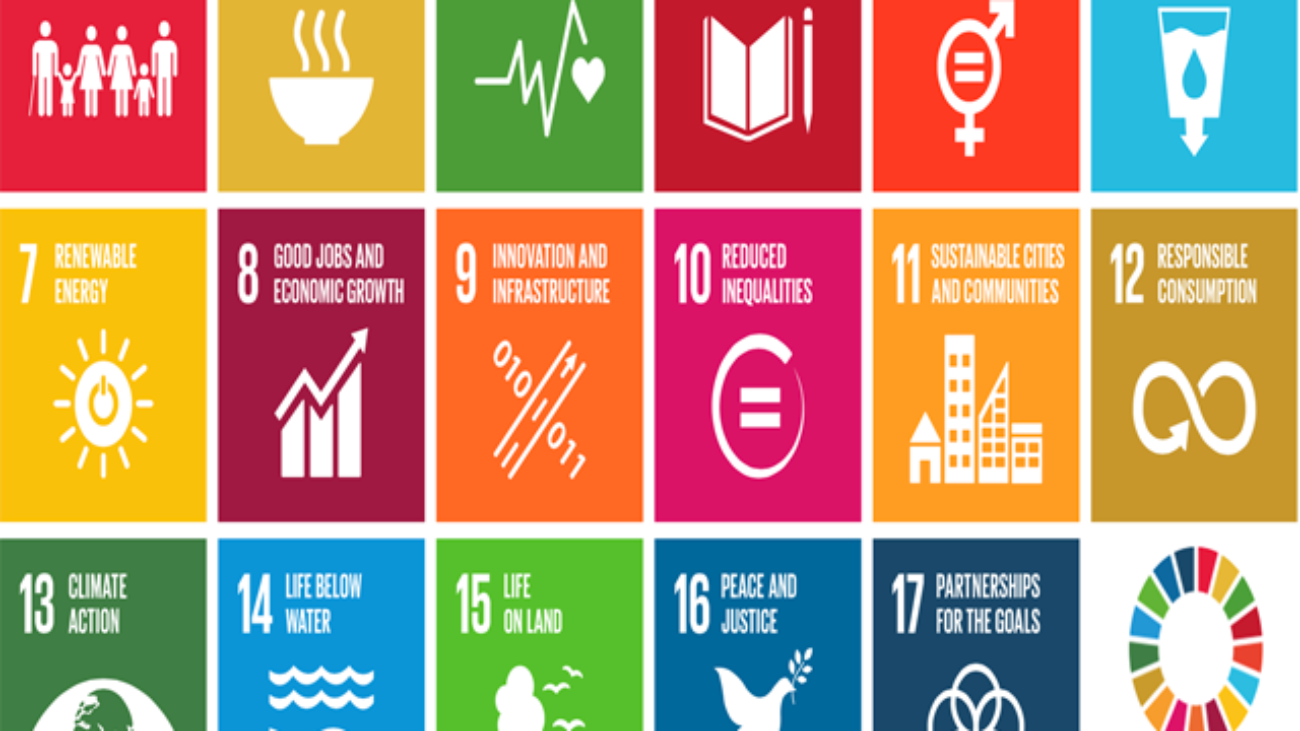
Chart_of_UN_Sustainable_Development_Goals

What is Human Development?

Beyond the richness of the economies in which the people are living, human development is a concept about thriving of the human life. Human development is an approach focusing on the people themselves and the opportunities they have.

With the finding that the economic growth does not bring automatic growth in wealth for everyone, human development focuses on the role of the people themselves in bringing human life to a better condition. Growth in income is only a tool rather than a final goal.

Human development is about providing more freedom and opportunity to the people for living their lives as they wish. For this, people should be able to improve and use their capabilities.

Human development is a multidimensional concept. The three variables used by UN in Human Development Index (HDI) constitutes the key dimensions of human development. These key dimensions are: a long and healthy life, being knowledgeable and have a decent standard of living. When these key dimensions are provided at first, the progress and improvement opportunities in other areas of human life will also grow.

Mainly, human development means having more alternatives and more opportunities and this must be the key reference in human development. Nobody can guarantee the happiness of the human being and the choices which people would make in their lives concern only themselves. However, human development at least aims to provide the necessary conditions to all the people individually or collectively for improving their potentials and spending a productive and creative live.


Where does Turkey rank in the world?

The measurement of the human development is one of the top agendas of national and international institutions, academia and the related civil initiatives. Although there are many indexes and measurement techniques in this area; The Human Development Index (HDI) which was created and owned by United Nations Development Program (UNDP) distinguishes itself with its comprehensiveness and integrated perspective. Although the measurement of the human development is a detailed and comprehensive work, HDI is taken as the most common and main reference.

Human Development Index is a measurement done through life expectancy, literacy rate and the standard of living and education. This index shows whether a country is a developed, developing or non-developed country and also it shows in which level the effect in its economy affects the standard of living in that country. The Human Development Index was first developed by Pakistani economist Mahbub ul Haq in 1990 and is being presented by United Nations Development Program in annual Human Development Report since 1993.

Human Development Index considers the below three key dimensions in the countries:

Long and Healthy Life: the measurement is done with the average life expectancy.
Knowledge: the measurement is done with the literacy rate (2/3) and the percentage of the registrations to primary and high schools and universities.
Decent Standard of Living: the measurement is done with per capita income and the calculation of the purchasing power in US Dollar.


Human Development in Our Country

Turkey has been listed in the reports and indexes since the beginning of the publishing in 1990. According to this; although Turkey has been listed among the countries with high level of human development by going up 15 lines especially between 2008-2013, the regression in last three years is remarkable.

187 countries were listed in Human Development Index 2015. The country with highest HDI score is Norway and the lowest HDI score belongs to Niger. Turkey has been listed as 72th in the Index and placed at the human development level. However, there is still much to do for Turkey in human development. For this, contribution to the human development falls first to the public enterprises and also to all enterprises and sectors.